
Nancy Apio Alesio, ICT Instructor and Scholarship Assistant, South Sudan
For the past five years, Nancy Apio Alesio has supported Mercy Beyond Borders (MBB) Scholars in Narus, South Sudan. She teaches computer skills, English, and mathematics; visits partner schools; and helps Scholars address challenges both in and outside the classroom.
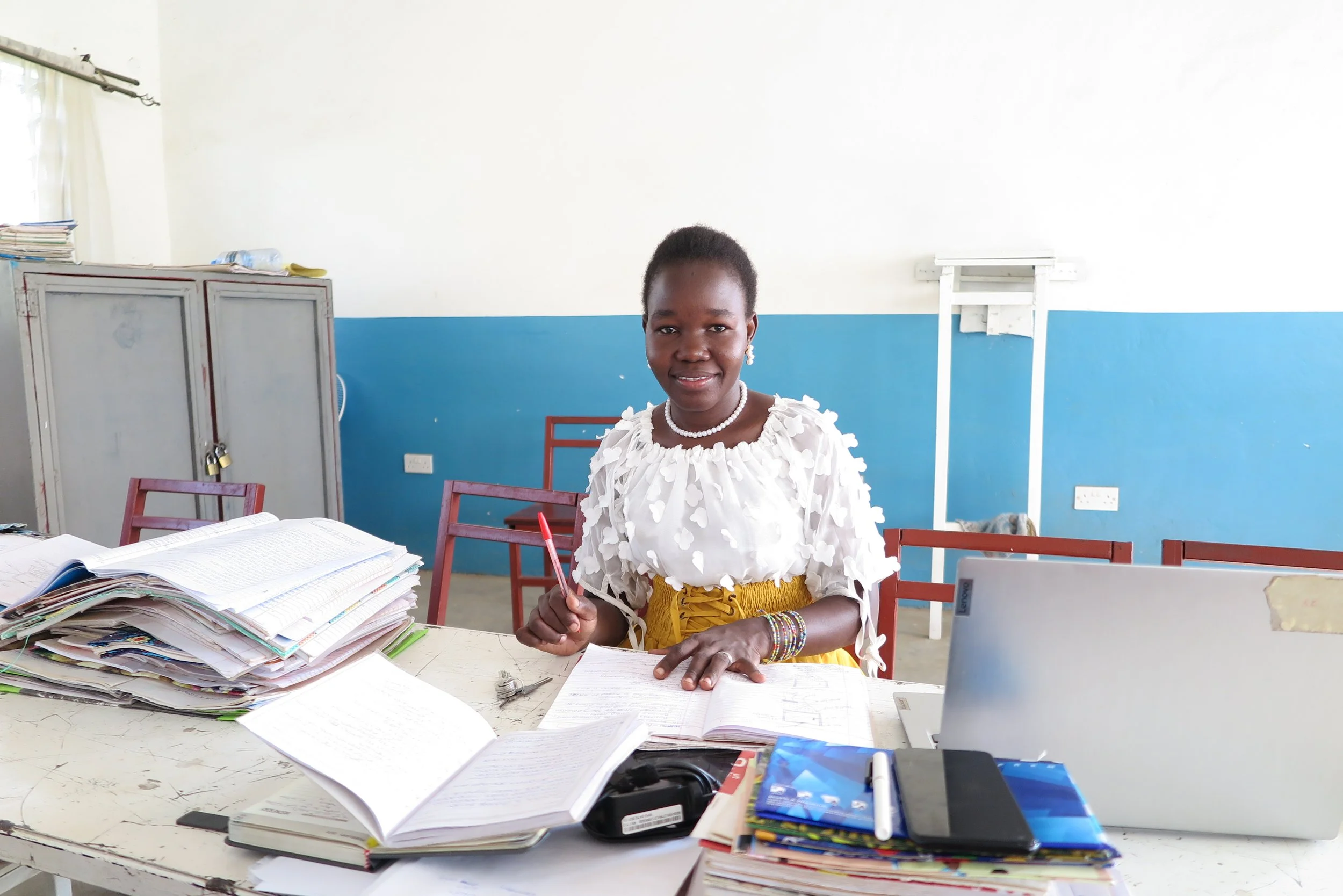
“I have always had a dream of giving back to the community,” Nancy says. “And this is what Mercy Beyond Borders does.”
Nancy holds a certificate in journalism and social development and previously worked as a protection monitor. She was drawn to MBB because of its focus on educating women and girls in South Sudan. She believes that when a girl receives an education, the benefits extend to her family and community.
Nancy especially values seeing students share what they learn with their siblings and parents. Over time, education can also challenge the expectation that girls should marry rather than remain in school.
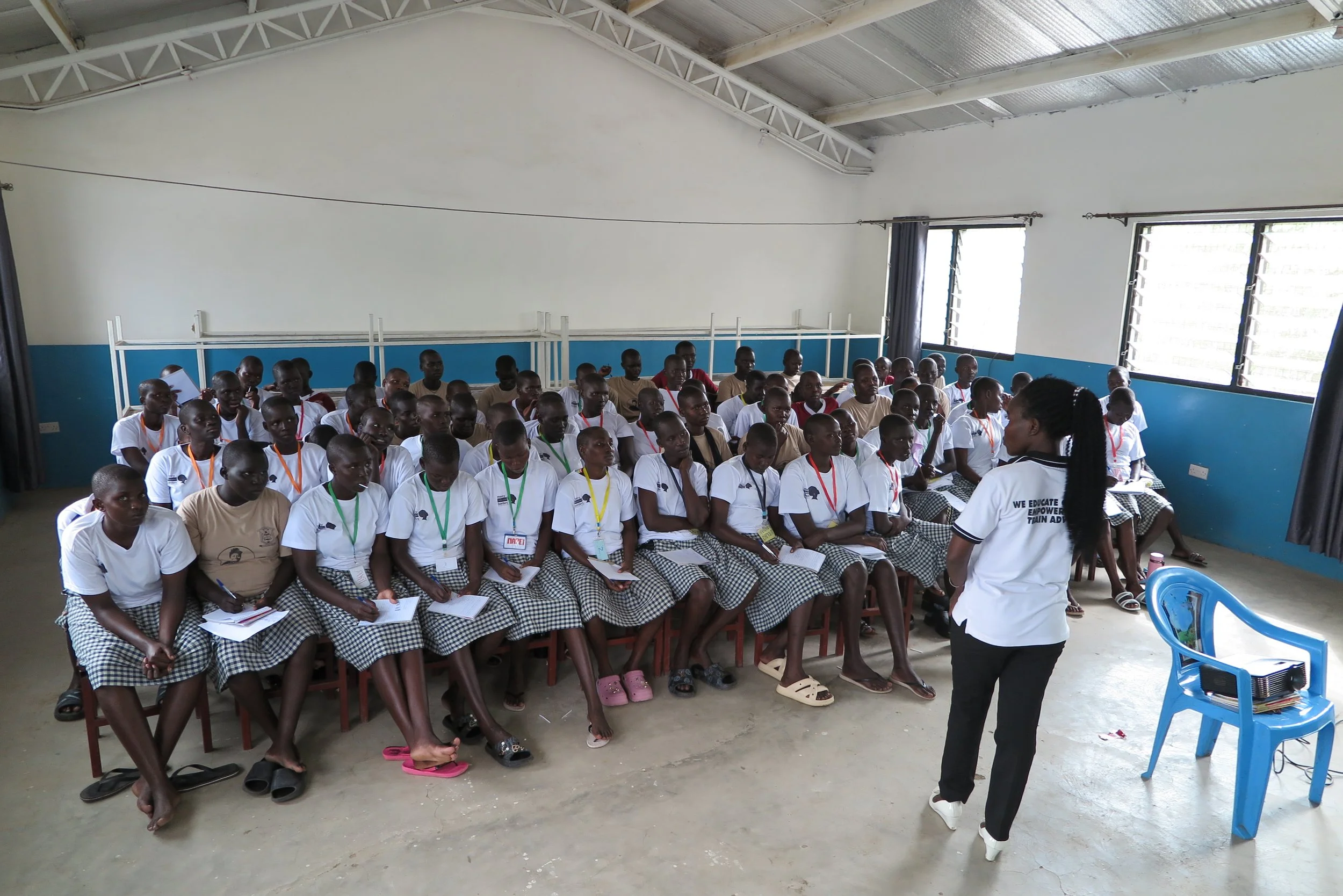
The work is not always easy. Years of conflict have affected families throughout South Sudan, and parents are sometimes hesitant to allow their daughters to continue their education. Training and support from MBB have helped Nancy respond to their concerns and build trust between families and schools.
She has also seen former Scholars become professionals and leaders. Cecilia Karama, who enrolled with MBB in 2011, graduated from university and now works as a social worker.
“The girls are able to get their families out of poverty, educate the community on the importance of education, take their siblings to school, and understand their rights,” Nancy explains. “Community members often listen to educated girls because they are believed to have a clearer vision.”

The growing number of girls attending and graduating from school gives Nancy hope. She has also seen more women enroll in adult education classes. “In my free time I step into adult classes to teach English and Mathematics",” she says, “which also helps me explain concepts better to the girls.”
“My dream is to see girls empowered through education, practicing the skills they acquired in school, educating future generations, promoting peace and unity, ensuring human rights are practiced, and protecting children from harmful traditions.”
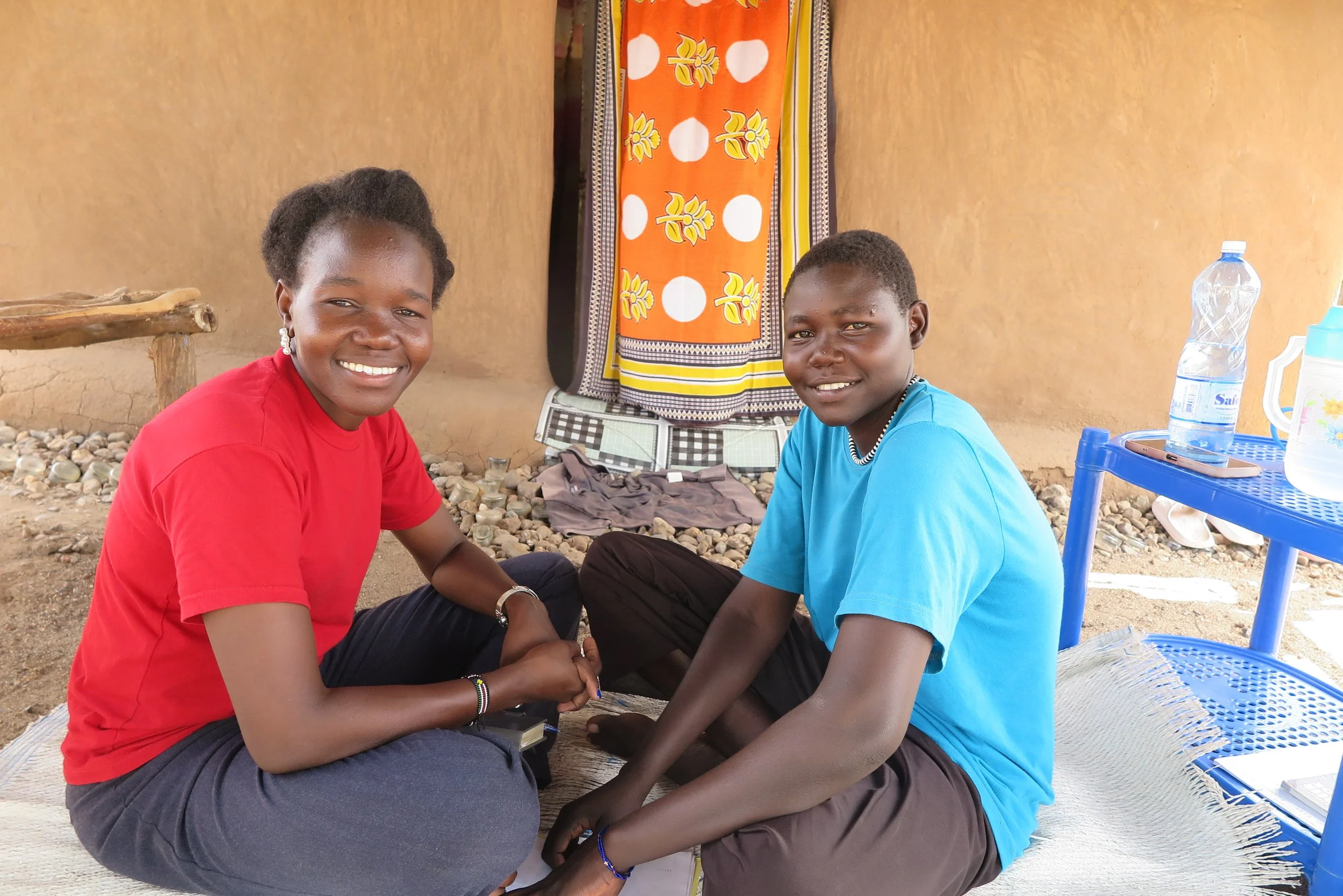
For Nancy, one of the most meaningful parts of the work is seeing Scholars become teachers and mentors themselves—passing their knowledge on to the next generation.